
Connecting Minds. Transforming Mathematics.
December 1st - 4th 2026
The 70th Annual Meeting of the Australian Mathematical Society, hosted by The University of Western Australia, Perth.
 SCAM ALERT Conference participants may be the target of accommodation scams. AustMS is not affiliated with any booking services, and any unsolicited messages regarding accommodation should be considered fraudulent. Do not respond to these requests. Always book and communicate directly with your hotel or Airbnb.

About the Conference
Welcome to the 70th Annual Meeting of the Australian Mathematical Society, which will be held from the 1st – 4th December 2026, hosted at the stunning campus of the University of Western Australia in Perth.
Bringing together researchers, educators, students, and industry leaders from across Australia and around the world, AustMS 2026 is a celebration of mathematical discovery, collaboration, and impact. From fundamental theory to real-world applications, the conference showcases the depth and diversity of contemporary mathematical sciences.
Set against the unique backdrop of Western Australia, this year’s meeting offers an opportunity to connect across disciplines, exchange ideas, and explore new directions in mathematics.
Plenary Speaker Profiles
Our invited speakers span a broad spectrum of disciplines, from pure mathematics and statistics to applied, computational, and interdisciplinary research, reflecting the depth and diversity of the mathematical sciences today. Their work addresses fundamental theoretical questions while also driving impact across areas such as data science, industry and technology.
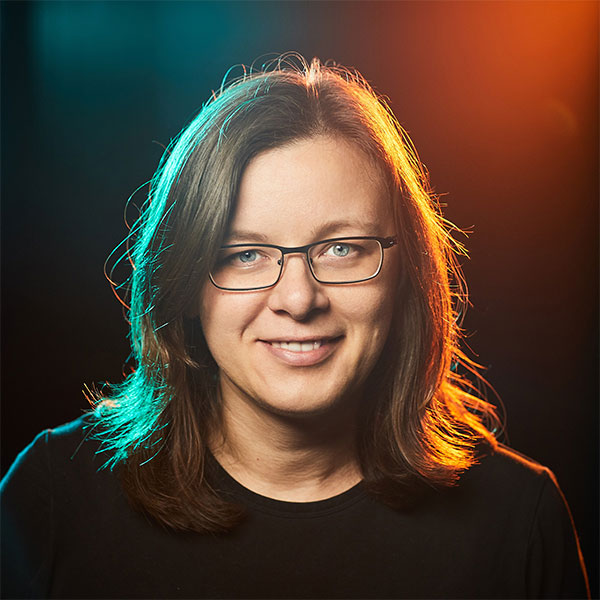
Vera Roshchina
Hanna Neumann Lecturer
UNSW
Biography
Good day! I’m Vera Roshchina, an applied mathematician working on convex and nonsmooth problems, primarily in optimisation. I am currently an Associate Professor in the School of Mathematics and Statistics at UNSW Sydney, where I also lead the School’s Research Nexus Frontiers in Fundamental Mathematics.
Before joining UNSW in 2018, I was an ARC DECRA Research Fellow at RMIT University and held postdoctoral positions at the University of Melbourne, Federation University Australia, and the University of Évora (Portugal). In 2021, I was awarded the Christopher Heyde Medal by the Australian Academy of Science. I obtained my PhD from the City University of Hong Kong, and my undergraduate degree from Saint Petersburg State University.
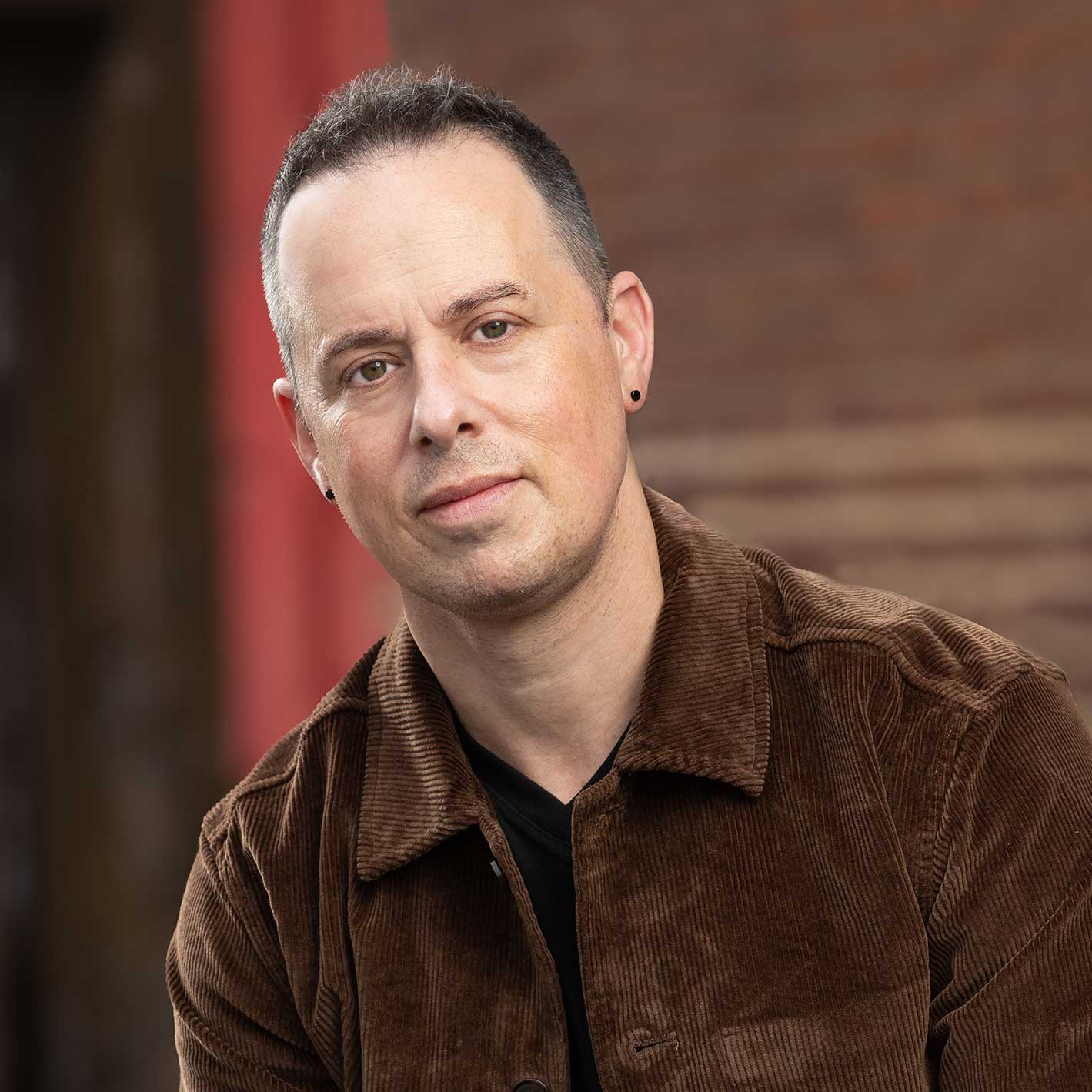
Chad Topaz
Dr Yuniupingu Lecturer
Williams College
Biography
Chad Topaz (A.B. Harvard, Ph.D. Northwestern) is Professor of Complex Systems at Williams College and co-founder of the QSIDE Institute, an independent nonprofit working at the intersection of data science and social justice. The author of more than 100 publications, Chad began his career using mathematics to understand problems in physics, chemistry, and biology, and now focuses on confronting inequity across the criminal legal system, education, environment, arts and media, and democratic institutions. His work has been covered in The Atlantic, The Guardian, MIT Technology Review, Science, Smithsonian Magazine, and the Washington Post, and his public-facing writing has appeared in the Boston Globe, Chicago Tribune, Philadelphia Inquirer, and Inside Higher Ed. He is the author of Unlocking Justice: The Power of Data to Confront Inequity and Create Change. His honors include a Kavli Frontiers Fellowship from the U.S. National Academy of Sciences, the Mary and Alfie Gray Award for Social Justice from the Association for Women in Mathematics, a best paper award from the Society for Industrial and Applied Mathematics, the Sorgenfrey Distinguished Teaching Award from UCLA, and the Rossmann Excellence in Teaching Award from Macalester College.
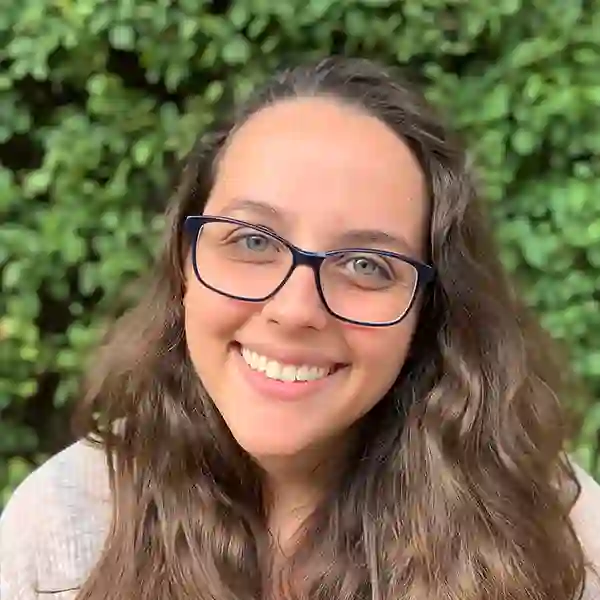
Luciana Basualdo Bonatto
ECR Lecturer
University Of Oxford
Biography
My research interests include Configuration Spaces, Diffeomorphism Groups, Homological Stability, Embedding Calculus, Knot Theory, and Operad Theory.
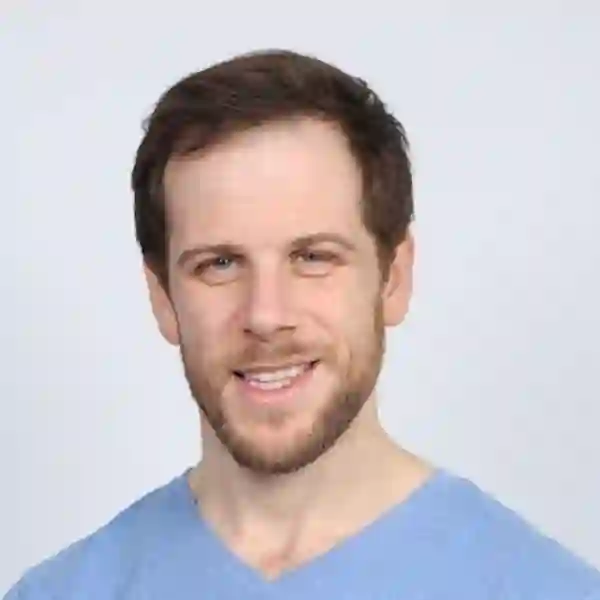
Christopher Lustri
ANZIAM Lecturer
University of Sydney
Biography
Chris Lustri is a senior lecturer in applied mathematics at the University of Sydney. He primarily works on understanding asymptotic analysis and resurgence, and how these methods may be applied to partial differential equations and discrete systems. He uses these techniques to study problems arising in nonlinear waves, fluid dynamics, and integrable systems.
After completing his PhD in 2013 at the University of Oxford, Chris was employed as a postdoctoral research at The University of Sydney. In 2016 he was appointed to a faculty position at Macquarie University, moving to the University of Sydney in 2023. Chris has received the J. H. Michell Medal (ANZIAM, 2023) and the Christopher Heyde Medal (Australian Academy of Science, 2024).
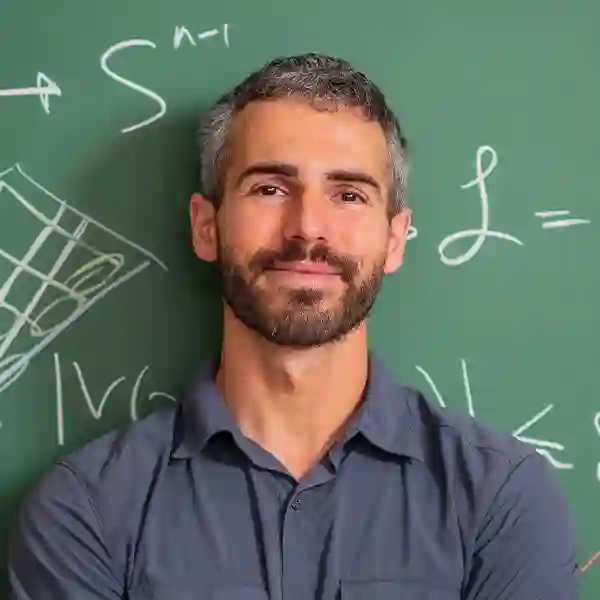
Joshua Zahl
Chern Institute of Mathematics
Nankai University
Biography
I am a professor at the Chern Institute of Mathematics at Nankai University. Prior to this I was an associate professor in the mathematics department at the University of British Columbia. I have a broad interest in classical harmonic analysis and combinatorics. I’m especially interested in incidence geometry, the restriction and Kakeya problems, and sum-product phenomena.
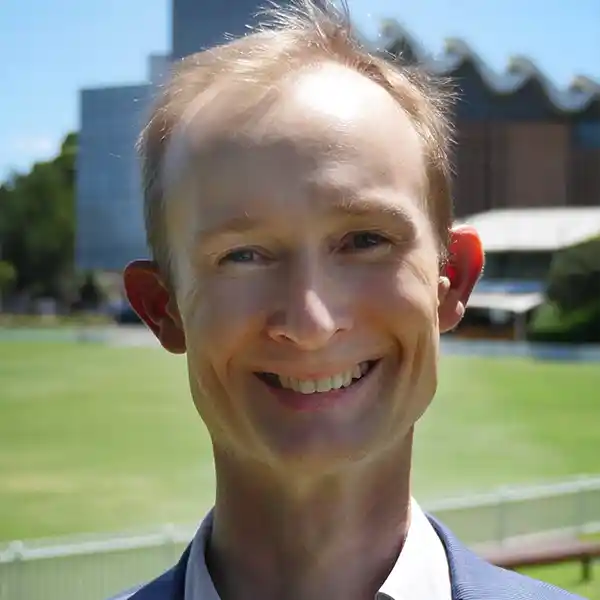
Gary Froyland
University of
New South Wales
Biography
Scientia Professor Gary Froyland leads the ARC Laureate Centre for Dynamical Systems and Data. His main areas of interest are Dynamical Systems, Machine Learning, and Optimisation. His research ranges from pure mathematics through to computation and application to industry and other scientific disciplines.
His dynamical systems research lies at the interface of probability, geometry, operator theory, and learning in nonlinear and chaotic dynamical systems.
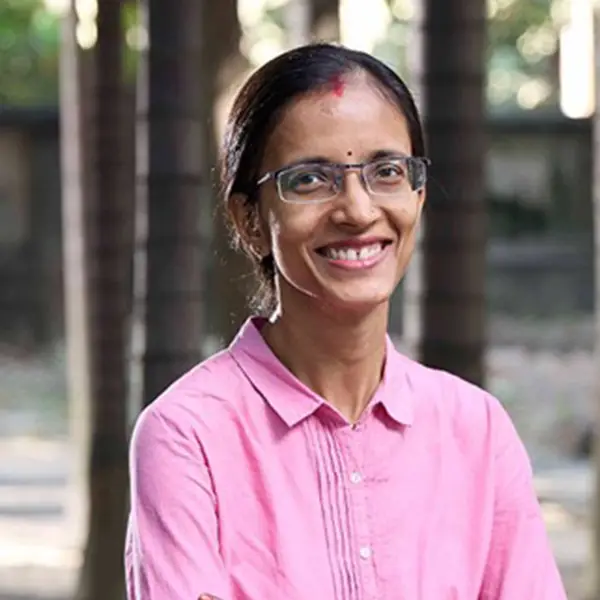
Neena Gupta
Indian Statistical Institute
Kolkata
Biography
Neena Gupta was born in 1984 at Kolkata. Her education from early childhood till PhD research had been in India. She obtained her PhD degree, under the supervision of Professor Amartya Kumar Dutta, from the Indian Statistical Institute in 2012. Earlier, she had obtained her M.Math. (Master of Mathematics) degree from the same institute in 2008. Before that she studied at Bethune College. She did her post-doctoral research at the Tata Institute of Fundamental Research in Mumbai in 2012.
Neena is known for her outstanding contributions to fundamental questions in affine algebraic geometric and commutative algebra, and especially for her complete solutions to the longstanding `Zariski Cancellation Problem’ for affine spaces in positive characteristic. Neena began her research career by studying global properties of certain affine varieties whose either local structure, or whose structure of fibres were given. She discovered the structure of locally Laurent polynomial algebras, a beautiful analogue of the theorem on locally polynomial algebras by Bass-Connell-Wright and Suslin, and other results on Laurent polynomial fibrations and related topics. Neena has developed general theories on a certain family of affine varieties which reveal surprising connections between deep questions on affine spaces and provide much sought-after conditions for the varieties to be affine spaces. In particular, she has demonstrated new families of linear hypersurfaces in higher-dimensional affine spaces which satisfy the Abhyankar-Sathaye Conjecture on the Epimorphism Problem. Some of her other significant discoveries include new algebraic characterisations of affine two and three spaces. New examples of non-cancellative varieties, certain K-theoretic properties of the ring of invariants of G_a-actions on affine spaces which she used to settle a question of Miyanishi, new results on the triviality of separable affine three forms, results on retractions of polynomial algebras, and results and examples around questions on finite generation of algebras arising out of Hilbert’s fourteenth problem.
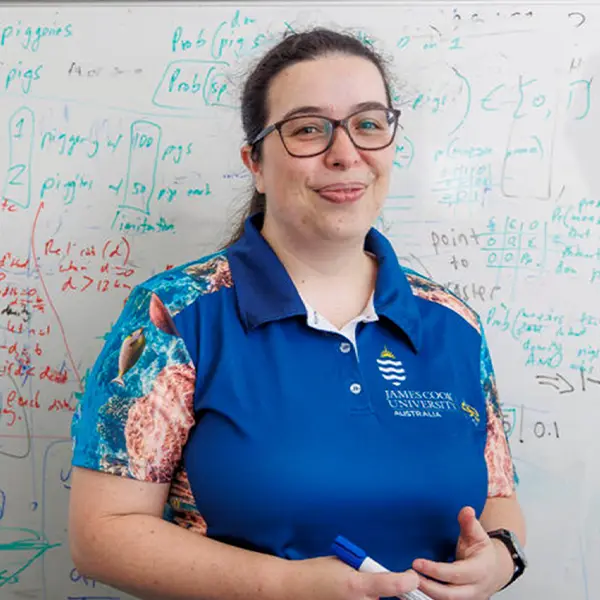
Roslyn Hickson
Public Lecturer
James Cook University
Biography
Prof Roslyn Hickson is a Science Leader for Emerging Infectious Diseases, a joint appointment between CSIRO and James Cook University. Her research focuses on the mathematical modelling of infectious diseases to inform policy and practice, with a particular emphasis on emerging, vector-borne, and zoonotic diseases through the lenses of biosecurity and One Health.
Roslyn was awarded the inaugural KA Landman Medal by ANZIAM in 2026 for outstanding contributions to industrial mathematics. Her work has had direct policy impact, including COVID-19 modelling that contributed to mask mandates on the NSW public transport network, and collaboration with Taiwan’s Centers for Disease Control on dengue fever surveillance. She has held research positions at the Australian National University, the University of Newcastle, IBM Research Australia, and the University of Melbourne, and was twice named a finalist in the MIT Technology Review EmTech Asia Innovators Under 35 list. She was awarded a Victorian Young Tall Poppy in 2018.
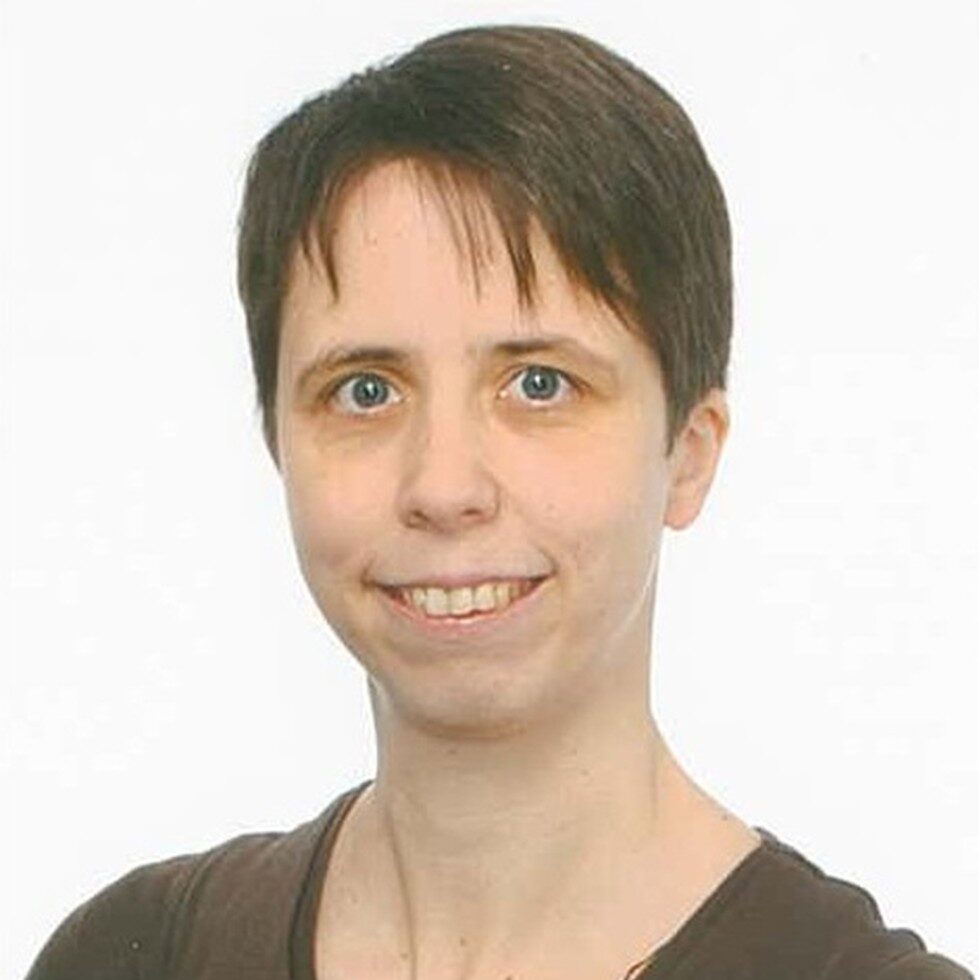
Johanna Knapp
ANZAMP Lecturer
University of Melbourne
Biography
Dr Johanna Knapp is a researcher in mathematical physics at the University of Melbourne, working at the intersection of algebraic geometry, gauge theory, and string theory. Her research explores deep connections between geometry and fundamental physics, contributing to our understanding of quantum field theory and the mathematical structures underlying the universe.
Dr Knapp is also an experienced educator and contributor to advanced teaching in areas such as conformal field theory and string theory, helping to shape the next generation of mathematical physicists.
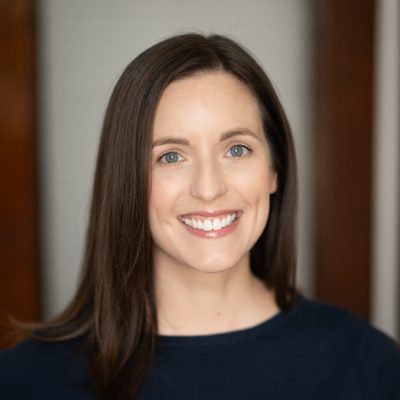
Caroline Turnage-Butterbaugh
Carleton College
Biography
Caroline Turnage-Butterbaugh is an analytic number theorist and associate professor of mathematics at Carleton College in Northfield, Minnesota, USA. Her research concerns analytic aspects of L-functions, including their moments and the vertical distribution of their zeros. She is partially supported by the National Science Foundation under grant NSF CAREER DMS-2239681.
Event Details @ UWA
Located on the banks of the Swan River, the University of Western Australia campus offers a world-class setting for collaboration and discovery. With its mix of heritage architecture, natural beauty, and proximity to Perth’s city centre and coastline, UWA provides an inspiring environment for this year’s conference.
| Event | Date & Time* |
| WIMSIG Dinner | Monday, 30 November (Evening) |
| Welcome Reception | Tuesday, 1 December (Evening) |
| Education Afternoon | Wednesday, 2 December (Afternoon) |
| Public Lecture (with Roslyn Hickson) | Wednesday, 2 December (Evening) |
| LGBTQIA+ Lunch | Thursday, 3 December (Lunch) |
| AustMS Annual General Meeting | Thursday, 3 December (Afternoon) |
| Conference Dinner | Thursday, 3 December (Evening) |
AustMS Early
Career Workshop (ECW)
The biennial AustMS Early Career Workshop (ECW) is a full-day event that will be held on Monday 30 November 2026, at The University of Western Australia. This event is intended to support early-career researchers (broadly defined, from commencing HDR students to academics several years post PhD) in meeting peers, developing practical skills, and learning about topics relevant to new academics today.
Further information will be made available closer to the date.
This workshop is supported by an Anne Penfold Street Award, which provides funding for attendees with caring responsibilities. If this applies to you, please indicate upon registration or contact one of the ECW organisers, who can help you with arrangements:
- Alex Tam (Adelaide University)
- Yudhi Bunjamin (University of New South Wales)
- Eugene Tan (University of Western Australia)
Explore Perth, Western Australia
Set in one of the world’s most isolated yet vibrant cities, the conference offers a unique opportunity to experience the natural beauty and relaxed lifestyle of Perth.
- Kings Park and Botanic Garden: One of the largest inner-city parks in the world, Kings Park offers sweeping views of the Perth skyline and Swan River. Delegates can explore native bushland, curated botanical gardens, and walking trails just minutes from UWA.
- Rottnest Island: A short ferry ride from Perth, Rottnest Island is famous for its crystal-clear waters, pristine beaches, and the iconic quokka. It’s an ideal day trip for conference attendees looking to experience Western Australia’s coastal beauty.
- More to Discover
The Swan River foreshore, perfect for walks and riverside dining. Perth’s vibrant CBD, with restaurants, bars, and cultural venues. Nearby beaches such as Cottesloe, known for sunsets over the Indian Ocean
Getting to UWA
By Public Transport
UWA is easily accessible via Perth’s public transport network. Frequent bus services connect the campus with the CBD, Subiaco, and surrounding suburbs, including major routes such as the 950 and CircleRoute services.
By Car
The campus is located at 35 Stirling Highway, Crawley. Parking is available on campus, though spaces can be limited during peak periods, and visitors are encouraged to consider public transport where possible.
By Active Transport
For those staying nearby, UWA is accessible by walking or cycling along the scenic Swan River foreshore, offering a relaxed and picturesque commute to the conference venue.
Contact Us
- austms2026-maths@uwa.edu.au